


Trilateral Naval Logistics Dialogue Considers Next Steps for Sustainment
WASHINGTON, DC – Senior U.S., Australian and Japanese officials met recently to discuss areas for further cooperation on mutual sustainment of their naval forces. Their focus was on opportunities for expanded training, technology sharing, wargaming and exercises to continue building maritime logistics interoperability in the Indo-Pacific region.
Royal Australian Navy Divers Train at Pearl Harbor for U.S. Virginia-class Submarine Sustainment By Ashley Calingo, AUKUS Integration & Acquisition
JOINT BASE PEARL HARBOR-HICKAM, Hawaii—Inside the flooded ballast tanks of a Virginia-class submarine, where there is no natural light and spaces are tighter than shoulder-width, Royal Australian Navy divers are learning how to sustain one of the world’s most advanced undersea platforms. Although the work is gritty, technical, and claustrophobic, it represents one of the clearest signs yet that AU...[Read More]
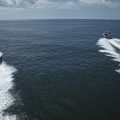

CENTCOM has become a battle lab for unmanned systems
When a U.S. Army helicopter went down near the Strait of Hormuz in June, an unmanned U.S. Navy vessel went looking for the crew. The Corsair, operated by U.S. 5th Fleet’s Task Force 59, helped recover two U.S. service members. A month later, three Corsairs were used for something entirely different: striking a submarine and ship maintenance facility at the Bandar Abbas naval base in Iran, marking ...[Read More]
Navy Demonstrates Collaborative Autonomy Mission Planning for Future Combat Aircraft
The U.S. Navy recently demonstrated a new capability designed to make autonomous aircraft easier to plan, operate and integrate into future combat missions.
PAE Munitions marks 50 years of U.S.-German partnership on Rolling Airframe Missile program
PAE Munitions marked the 50th anniversary of the Rolling Airframe Missile (RAM) program Sept. 17 during the 97th RAM Steering Committee meeting, recognizing five decades of U.S.-German cooperation to deliver and sustain a critical naval self-defense capability.
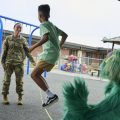

New Sesame Street programming is a walk in the park for military kids
After 20 years of providing educational resources for young military children, the ageless Elmo has added a new digital game featuring exercises ranging from bunny hopping to catching pretend bubbles. The cuddly red creature and his Sesame Street buddies have teamed up again with the Department of Defense’s Office of Military Community and Family Policy to continue their work for military preschoo...[Read More]

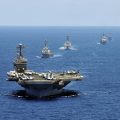

USS Abraham Lincoln arrives in Guam as deployment enters 10th month
The Nimitz-class aircraft carrier USS Abraham Lincoln and Carrier Strike Group 3 pulled into Guam on Saturday for a short logistics stop, officially marking the 10th month of its deployment. The Lincoln left Naval Station North Island in San Diego, California, on Nov. 21, 2025, and joined U.S. Naval forces in the Middle East to support combat operations during the Iran war. “The stop on Naval Base...[Read More]
USS Abraham Lincoln (CVN 72), USS Frank E. Petersen Jr. (DDG 121) Arrive in Guam
Nimitz-class aircraft carrier USS Abraham Lincoln (CVN 72), flagship of Carrier Strike Group (CSG) 3, Arleigh Burke-class guided-missile destroyer USS Frank E. Petersen Jr. (DDG 121), and the embarked staffs of Carrier Air Wing (CVW) 9 and Destroyer Squadron (DESRON) 21, arrived in Guam for a brief logistics stop, Sept. 19, 2026.
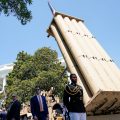

The Pentagon asked industry how fast it could make more weapons. The numbers remain private.
Twenty-six days after the Pentagon’s deadline for defense companies to propose faster weapons production, the Defense Department has not publicly disclosed how many companies responded or what production timelines they offered. Deputy Defense Secretary Steve Feinberg gave industry leaders until Aug. 26 to submit plans for “significantly faster, more aggressive delivery schedules and/or increased p...[Read More]
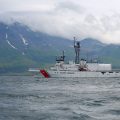

US watching Chinese marine presence off Alaska, Arctic Coast Guard chief says
The United States is watching China’s presence in its Arctic zone “very closely” amid concerns regarding the security of the U.S. homeland, a senior U.S. Arctic military official said. So far in 2026, four Chinese research vessels have conducted work offshore in the U.S. Arctic, compared to a total of five in 2025, Rear Adm. Bob Little, commander of the U.S. Coast Guard’s Arctic District, told Reu...[Read More]
USS Jason Dunham Arrives in Cyprus
The Arleigh Burke-class guided-missile destroyer USS Jason Dunham (DDG 109) completed a scheduled port visit in Limassol, Cyprus, Sept. 17, 2026.