



The Spanish Flu — a deadly postscript to WWI — started at a US military base
In the spring of 1918, as American soldiers prepared to go “over the top” for the first time during World War I, a handful of army physicians began noticing a strange sickness that began to grip service members. The virus, resulting in deadly pneumonia, struck down previously healthy young men within days, some within hours. Postmortem exams revealed soggy lungs with evidence of hemorrhaging, acco...[Read More]


US in talks to resettle 1,100 Afghans in Congo
The Trump administration is in talks with the Democratic Republic of Congo to resettle 1,100 Afghans who have been stranded in Qatar awaiting U.S. visas, according to an advocacy organization that works on their behalf. The discussions underscore the legal hurdles facing Afghans who fled the Taliban after U.S. immigrant visa processing for Afghan nationals was effectively halted, leaving them in l...[Read More]


Blue Ridge departs Okinawa, Japan
U.S. 7th Fleet flagship USS Blue Ridge (LCC 19) departed Okinawa following a port visit, Mon. 21, 2026. Blue Ridge’s last visit to Okinawa was in 2020.
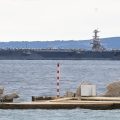

Navy Review Puts Future of Highest-Tech US Aircraft Carriers in Question
The U.S. Navy is reviewing the design and costs of one of its most high-tech and expensive warships — the Ford-class aircraft carrier — and the service’s top boss is not ruling out canceling future versions of its design.
‘We Think in Decades’: ONR Leaders Talk Future of Autonomy, Unmanned Innovation
When asked about the Office of Naval Research’s (ONR) role in the development of autonomous and unmanned systems, Chief of Naval Research (CNR) Dr. Rachel Riley highlighted some of the command’s most successful investments: REMUS underwater vehicles in the 1990s and early 2000s, swarmboats in 2014, LOCUST aerial vehicles in 2015, and the Sea Hunter and Sea Hawk surface vehicles in 2017. “I don’t s...[Read More]
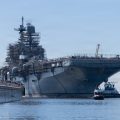

Navy ‘going to study’ possibility of building ships outside US, Phelan says
The U.S. Navy’s top civilian said Tuesday that the service would look into the concept of utilizing foreign partners to manufacture the nation’s warships as it seeks to address its growing shipbuilding needs. Navy Secretary John Phelan told reporters at a media roundtable at Sea-Air-Space 2026 in Washington that the Navy was facing a labor capacity problem at home and needed help remediating it. “...[Read More]


This WWI soldier saved two men from a burning tank with his bare hands
When the American Expeditionary Forces joined the Allied armies on the Western Front in World War I, there was one condition upon which their commander, Gen. John Pershing, insisted. He wanted the AEF to fight as an army, not a collection of separated units scattered among the Allied armies. For the most part, he got his way by the time the United States’ First Army was launched against the German...[Read More]
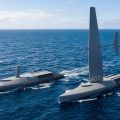

Saildrone announces new USV class aimed at anti-submarine warfare
Saildrone, a maritime defense company, announced on Monday a new class of unmanned surface vessels designed for anti-submarine warfare operations. The company released the Saildrone Spectre design, a vessel 54 meters long and 250 metric tons that’s capable of a speed up to 30 knots, making it the company’s “most capable” platform, Salidrone said. Spectre is meant for ASW missions, which demand “ex...[Read More]
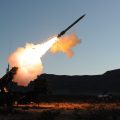

US Navy to integrate PAC-3 MSE interceptor missile with Aegis Combat System
As demand surges for one of the military’s most in-demand missile interceptors, the Navy is preparing to bring it to sea. The service plans to integrate the PAC-3 Missile Segment Enhancement interceptor into its Aegis Combat System for the first time, Lockheed Martin announced in a Tuesday statement, as demand for the missile grows and the Pentagon expands production. The Army uses the interceptor...[Read More]


Pentagon seeks funds for Golden Dome, drones, AI in largest-ever budget request
The Department of Defense on Tuesday unveiled a $1.5 trillion budget proposal for fiscal 2027 — a 42% year-over-year increase and the most expensive military outlay in modern history. “We’re facing one of the most complex and dangerous threat environments in our nation’s 250-year history,” Jules J. Hurst III, the under secretary of war and chief financial officer, told reporters at a briefing at t...[Read More]


The Military Needs a ‘Service Life Extension Program’ for Its People
Former Navy SEAL John Doolittle says the military must move from reactive care to predictive readiness using data and human performance insights to sustain the force.
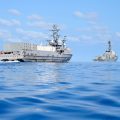

US Navy unmanned surface vessel fleet to grow sevenfold in Indo-Pacific
The U.S. medium-sized unmanned service vessels fleet could jump from roughly four to 30 vessels by 2030 in the Indo-Pacific, according to officials. As of now, the U.S. has at least four medium-sized unmanned service vessels that previously completed deployments in the region. In just four years, that amount could be approximately seven times larger, according to U.S. Navy Capt. Garrett Miller. Sp...[Read More]